
Your journey through space and time begins here
Known as the Red Planet, Mars has long fascinated humanity with its rusty deserts, icy poles, and colossal volcanoes. Scientists believe it may once have had flowing water — and possibly life. Today, robotic explorers like NASA’s Perseverance and Curiosity roam its surface, uncovering clues about its ancient past. With every new discovery, Mars brings us closer to understanding whether it could one day become the next home for humankind.

8:30 PM – 12:00 AM

Southwest, below the constellation Gemini

Use binoculars to spot Mars’ reddish glow
Look toward the eastern sky after midnight to witness the Orionids Meteor Shower, one of the most reliable annual displays. Expect up to 20 bright meteors per hour, streaking across the night sky.
1:00 AM – 4:00 AM

October 22–23, 2025
SClear skies across the Northern Hemisphere
On this night, the Moon will partially darken as it passes through Earth’s shadow. The sight of the dimmed, reddish Moon makes it an unforgettable experience for skywatchers.
10:45 PM – 12:15 AM
November 8, 2025
Visible From Africa, Europe, and Asia
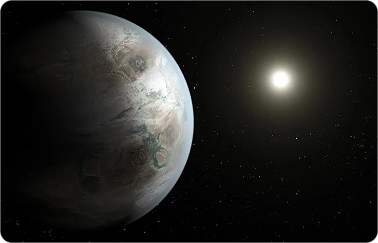
Astronomers have confirmed Kepler-452b, an Earth-like exoplanet 1,400 light-years away in Cygnus. About 60% larger than Earth, it orbits a Sun-like star in the habitable zone where liquid water could exist. Dubbed "Earth's older cousin," this discovery suggests potentially habitable worlds may be common in our galaxy.
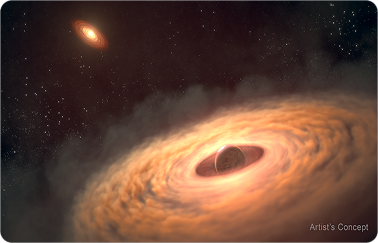
NASA’s James Webb Space Telescope (JWST) has detected water vapor in the atmosphere of WASP-96 b, a gas giant about 1,150 light-years away. Though not habitable, this “hot Saturn” has provided the clearest-ever spectrum of an exoplanet’s atmosphere — a breakthrough in how we study alien worlds.
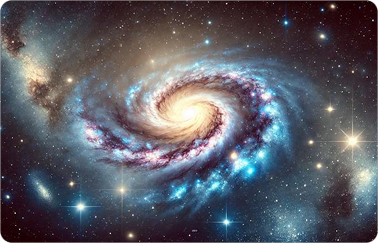
Using the James Webb Space Telescope, astronomers have detected JADES-GS-z14-0, the most distant and ancient galaxy ever observed — light from it has traveled over 13.4 billion years to reach us. This galaxy formed just 290 million years after the Big Bang, offering a direct glimpse into the infant universe.

Emma Laurent
Lyon, France
“Every night, I set up my small telescope on my balcony to catch a glimpse of Mars or Jupiter. Sites like CosmicExplore make me feel connected to something bigger — a global family of stargazers sharing the same wonder.”

Carlos Mendes
São Paulo,Brazil
“I started following meteor showers only last year, and CosmicExplore helped me track my first Perseids. Now I can recognize constellations by name — it’s like learning a new language written in light!”

Aisha Rahman
Kuala Lumpur, Malaysia
“What I love most about astronomy is how it blends science and imagination. Through CosmicExplore, I discovered upcoming space missions and exoplanets — and it fuels my dream of working in astrophysics someday.”
Lets see what are the most asked questions that people asked with us.
What exactly is a black hole?

What is dark matter, and why can’t we see it?
Is there life beyond Earth?
How do astronauts prepare for space travel?
Why does the Moon look different every night?
Why does the Moon look different every night?
Get weekly updates on celestial events, new discoveries, and astronomy tips delivered to your inbox.